Building date: 1839
Original use:
Corner structures:
Mortar application and content:
Types and uses of stones:
Types and choice of windows:
Structures with similar masonry details:
Masons who worked on building: Levi Boughton
Unique features:
Map views courtesy Google Maps. Address is Google Earth confirmed; 43°11'26.86"N 80°22'44.10"W.
City of Paris and Brant County Maps.
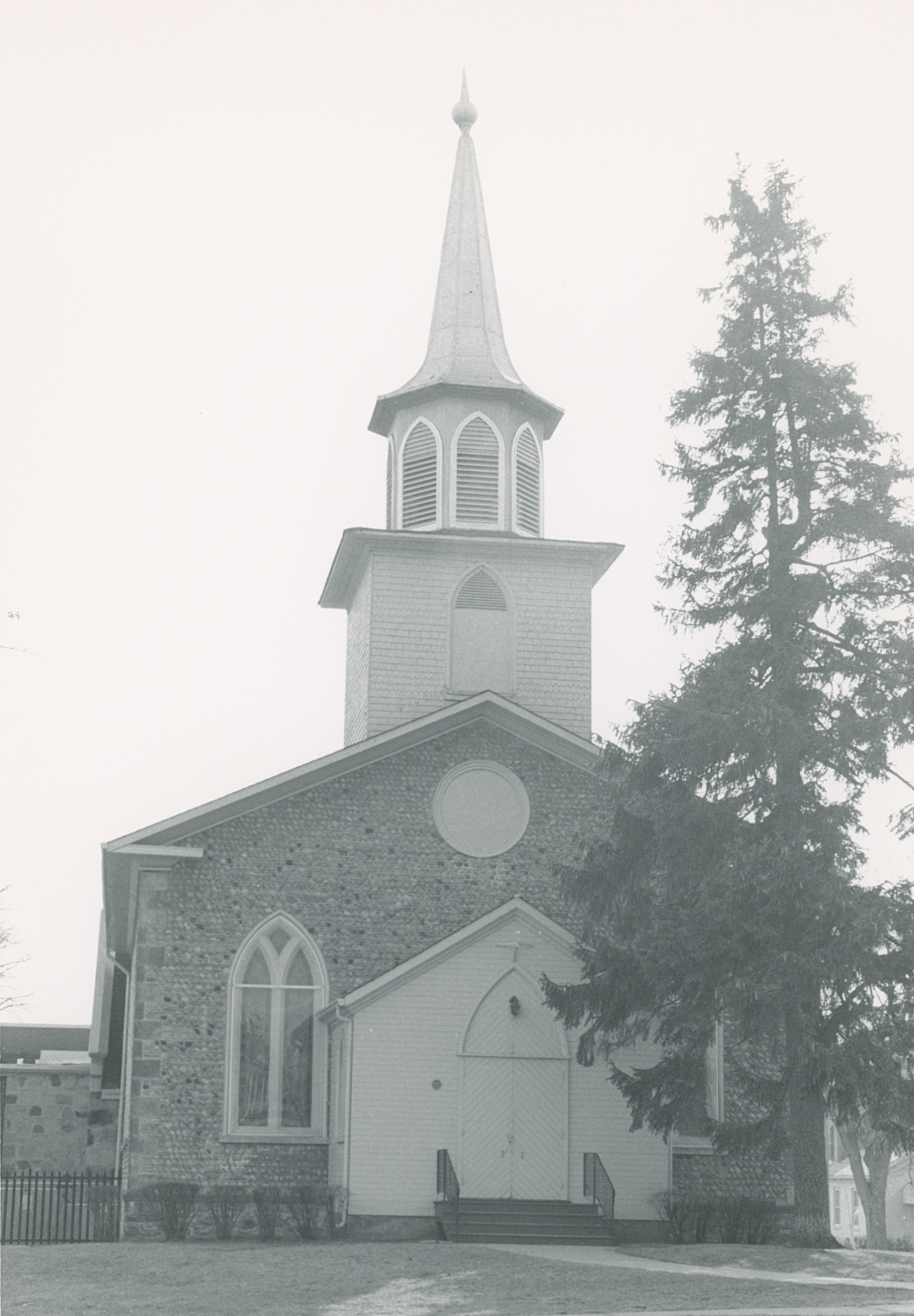
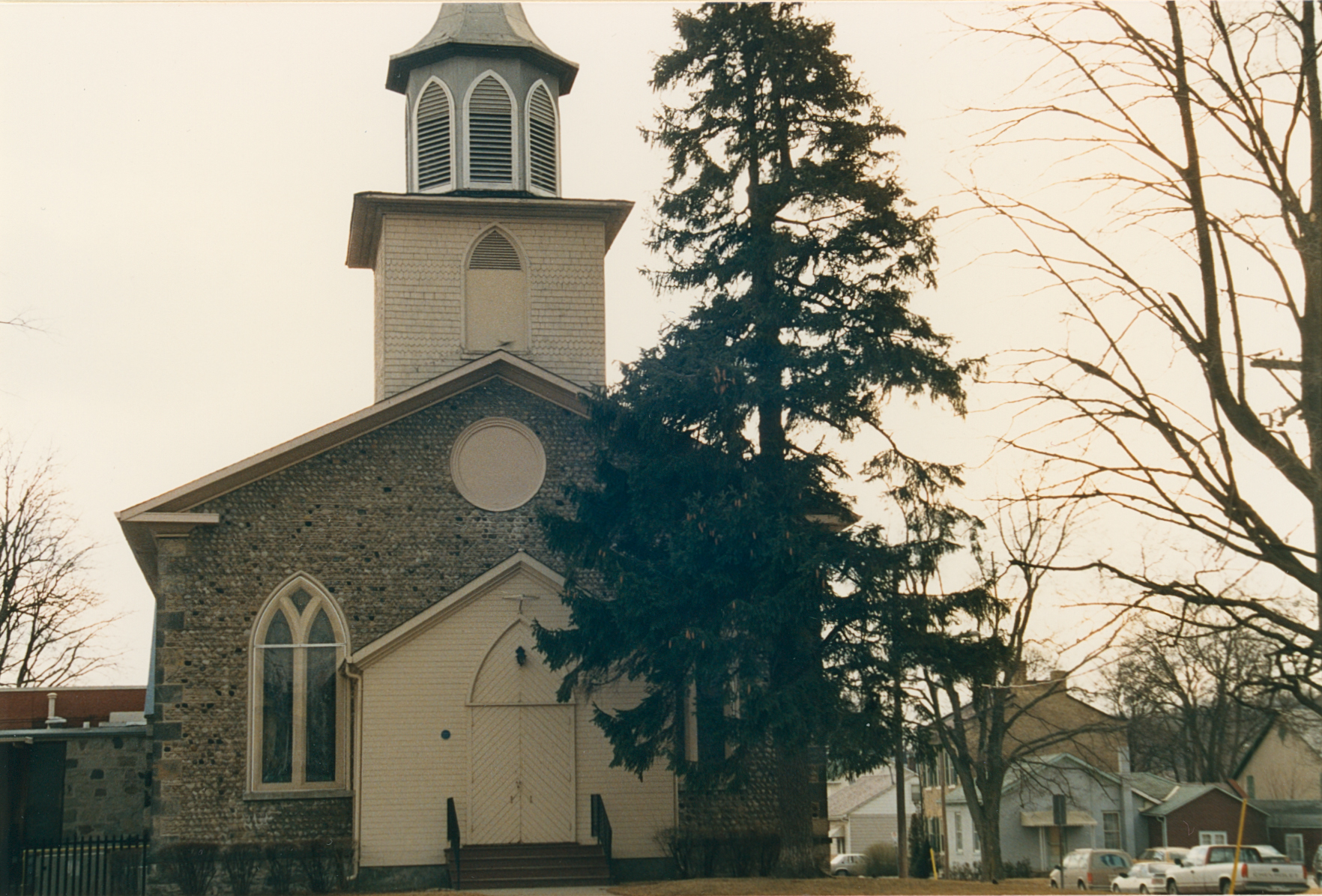
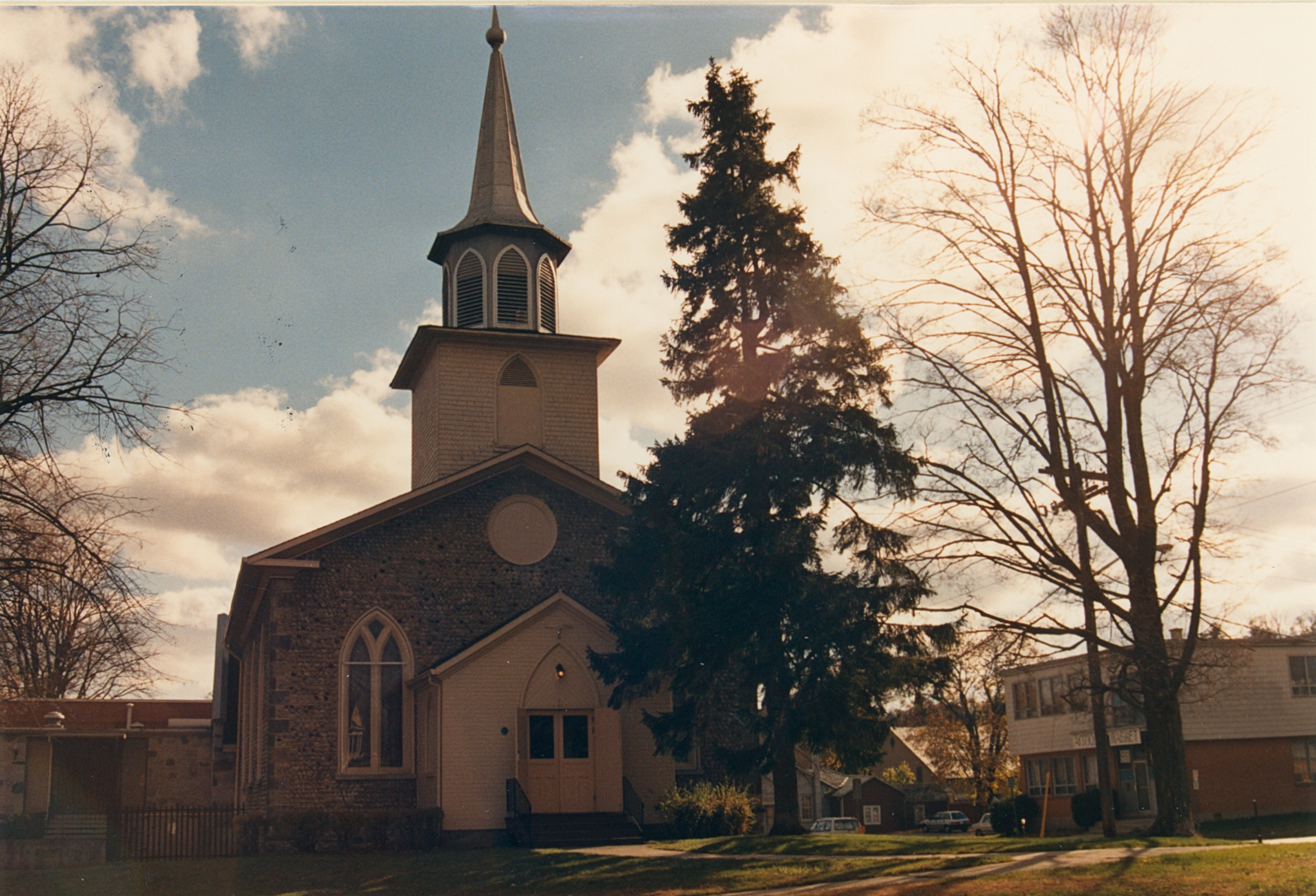
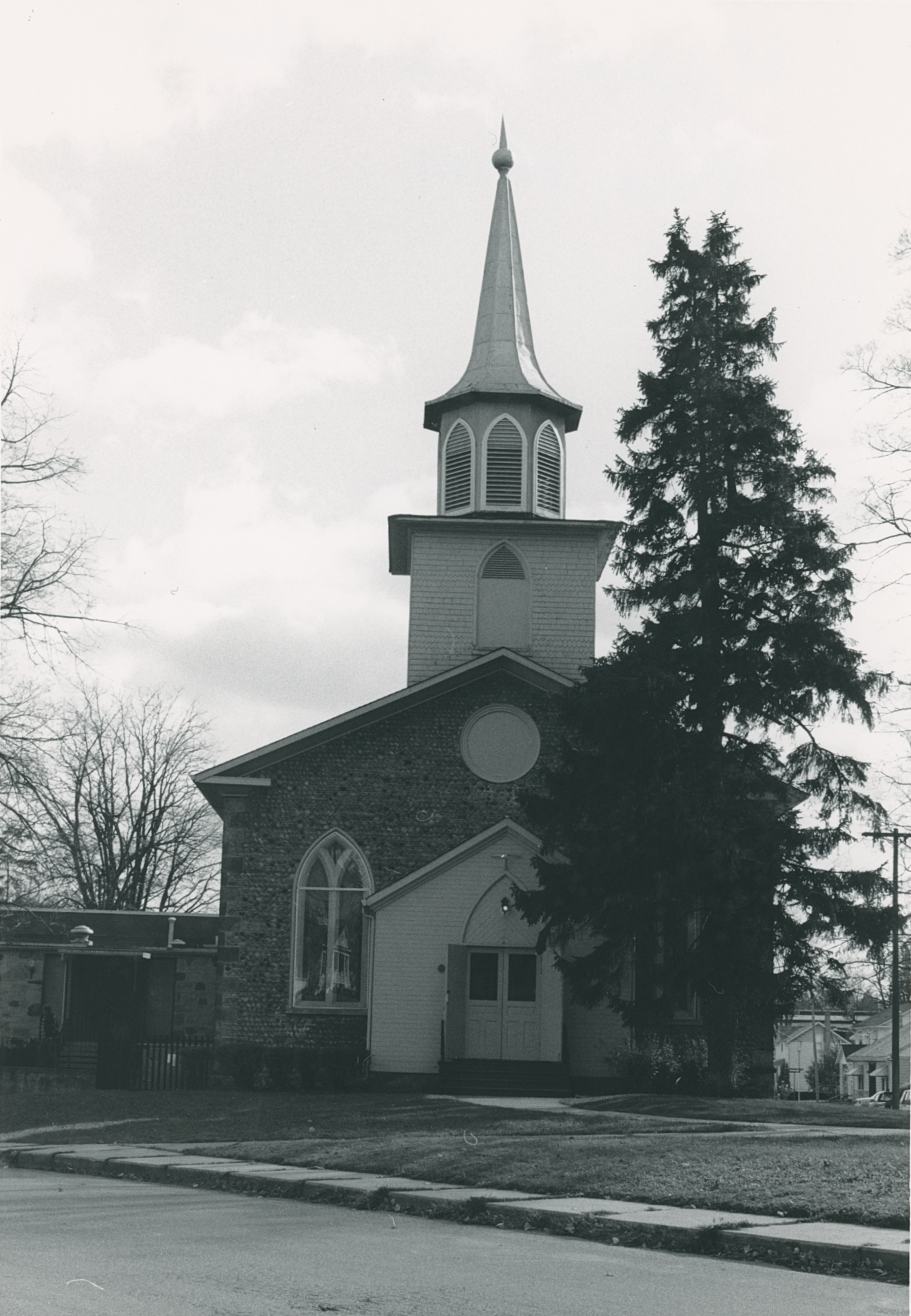
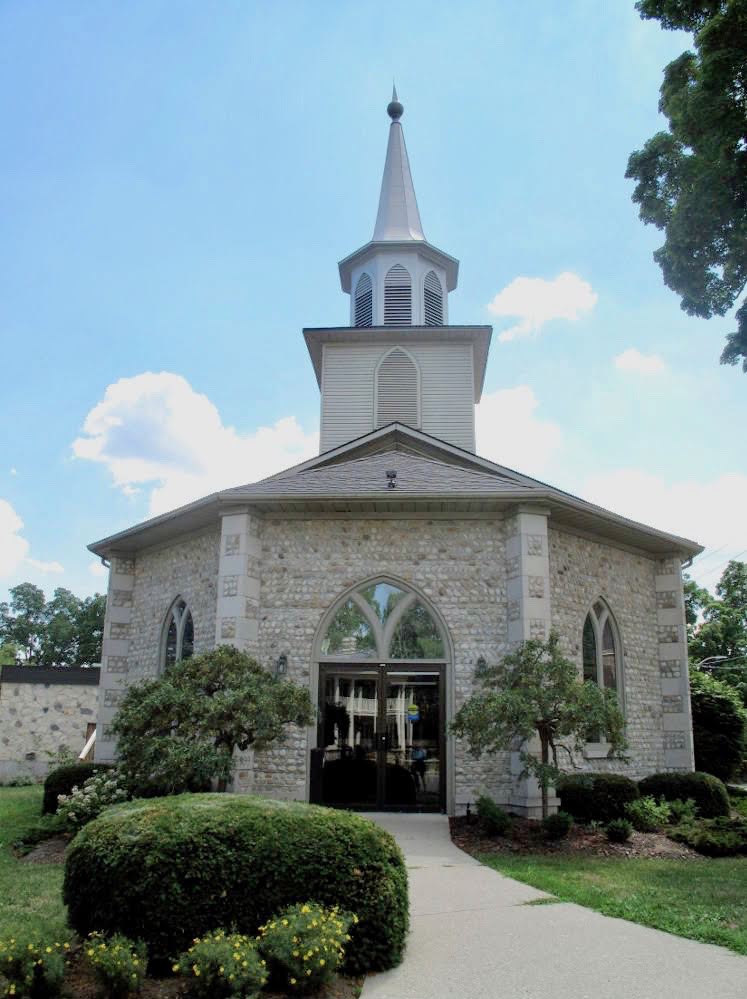
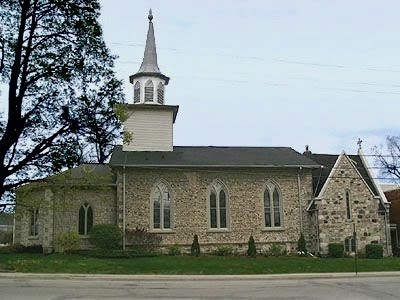
Cobblestones were collected and piled on the site in the fall of 1838 and building began in the spring of 1839. By that fall the basic structure was completed. However, there was no front door. It was installed the summer of 1840 and by 1841 a stove and the necessary stovepipes made the church usable. As time marched on a bell in the church steeple summoned the congregation and a sundial on the lawn kept the whole town on time. Changes were made as the congregation grew: In 1663 the chancel and Sunday school were added. They were the work of renowned architect John Turner. In 1913 the Parish Hall was added. A kitchen addition was completed in 1963. The front entrance was changed and a new front addition was added in 1969. Today the church is one of the town's most cherished land marks.
Levi Boughton, a master mason from New York brought the art of cobblestone masonry to the area. Boughton did the cobblestone work here with William Ravell, a mason and later a building contractor. It's possible that the Nimmo House was the first cobblestone building, the church the second. Cobblestones of Paris, Paris Museum and Historical Society pamphlet
Cobblestones of Paris, by Paris Museum and Historical Society. Portion of pamphlet that applies to the Bosworth House.
County of Brant Heritage Driving Tour, page 16: St. James Anglican Church, 1838 (Designated)
This is located in an area known as the Upper Village, the oldest section of town. It is a fine example of Gothic Revival architecture. It was Levi Boughton's first commission shortly after he arrived in Paris. Hiram Capron, the funder of Paris, and his wife Mary donated land for the construction of the church. Funds came from St. James Anglican Church in Edinburgh, Scotland, with the understanding that the church be made of stone. It was built in 1839. Congregational and local donations also helped the cause. Boughton also served as a deacon and trustee of the church.
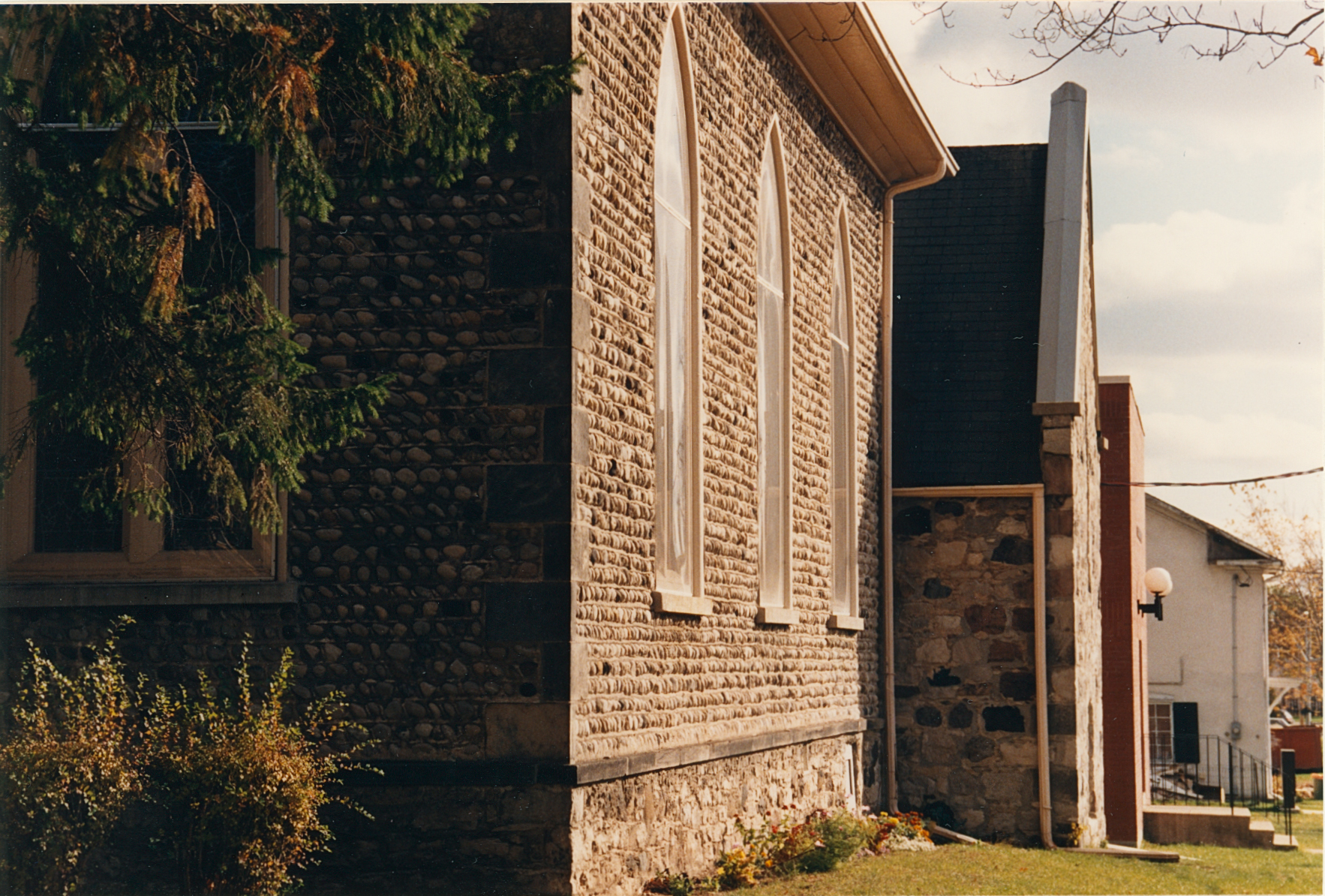
Boughton also built the nave, which he designed in Classical Revival style combining the Gothic style in the windows and door. From the east bank on Willow Street cobbles were gathered but not sorted as to size or color. Only two to five rows per day could be laid because the mortar was slow to dry.
Random stones were embedded into the thick mortar with every fifth or sixth stone tied into the thick rubblestone walls. Between the spaces the stones were then filled with mortar to form a sort of raised inverted V. The inch wide horizontal mortar joints were wavy. The main walls are 18 inches thick and 17 feet high from the water table, which is cut stone protruding two inches over the basement to throw the water off the basement walls. The parish hall was a later addition. The new front section was constructed in 1989. Richard Palmer blog.
County of Brant Public Library Digital Collections search results for "St James Anglican Church": available images and links; Building Summary. Also see "A Movement of the Spirit", by Roger Sharpe.
- "Cobblestone Masonry", 1966, Carl Schmidt: Name reference, Saint James Angelican Church
- Page 227, Page 312
¹ Photography courtesy Martin and Sheila Wolfish.
² Photography courtesy Richard Palmer.
